
- +91 7680015156
- advaithacdc@gmail.com
10 Brain Boosting Activities to Awaken the Brain for Learning Readiness
- Home
- Blogs
- 10 Brain Boosting Activities to Awaken the Brain for Learning Readiness
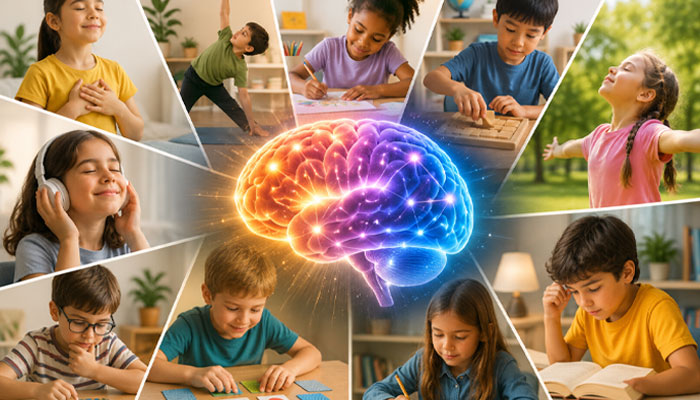
Every child learns best when the brain and body are active, alert, and ready to focus. Before children begin reading, writing, problem-solving, or classroom activities, a few simple movement and sensory exercises can help prepare them for learning. Brain-boosting activities encourage coordination, attention, memory, balance, motor planning, and communication between different parts of the brain.
Learning readiness is not only about sitting quietly at a desk. Children need opportunities to move, explore, listen, touch, balance, and coordinate their bodies. Activities that combine movement with thinking can help children become more organized, attentive, and confident during learning tasks.
Here are 10 simple brain-boosting activities that parents, teachers, and caregivers can include in a child's daily routine.
1. Cross-Crawl Movement
Cross-crawl activities involve moving opposite sides of the body together. For example, ask your child to touch the right elbow to the left knee and then the left elbow to the right knee.
This movement encourages both sides of the body to work together and supports bilateral coordination. Cross-pattern movements may also help children develop body awareness, rhythm, attention, and coordination needed for activities such as reading, writing, dressing, and sports.
Start slowly and encourage the child to perform the movements with control. Once the child becomes comfortable, increase the speed or turn the activity into a fun movement game.
2. Cup Stacking
Cup stacking is an engaging activity that combines visual attention, hand-eye coordination, sequencing, speed, and fine motor control. Give the child a set of lightweight plastic cups and encourage them to build simple towers, pyramids, or different stacking patterns.
Children must observe, plan, move their hands accurately, and remember the correct sequence. These skills are useful for many classroom activities that require concentration and organized thinking.
Begin with three or six cups and gradually introduce more challenging patterns. Encourage children to use both hands instead of relying on only their dominant hand.
3. Animal Walks
Animal walks are excellent whole-body activities for children. Ask the child to move like a bear, crab, frog, duck, or bunny. These movements strengthen muscles while providing valuable sensory information to the body.
Bear walks and crab walks encourage children to coordinate their arms and legs while maintaining balance. Frog jumps develop lower-body strength, while bunny hops improve rhythm and coordination.
Animal walks can be especially useful before table activities because they allow children to release extra energy while activating their muscles and body awareness.
4. Balance Activities
Good balance supports posture, coordination, movement control, and confidence. Simple activities such as standing on one leg, walking along a straight line, or stepping across cushions can challenge a child's balance system.
You can create a simple balance path at home or in the classroom using tape, pillows, stepping stones, or safe floor markers. Ask children to walk forward, backward, or sideways along the path.
As their balance improves, add small challenges such as carrying an object, catching a ball, or counting while walking.
5. Balloon Tap Game
Balloon games are simple but highly effective for developing attention and hand-eye coordination. Ask children to keep a balloon in the air by tapping it with their hands.
You can make the activity more challenging by asking them to alternate hands, use only one hand, tap the balloon while counting, or name colors and animals during the game.
The slow movement of a balloon gives children more time to process visual information and plan their movements, making it suitable for many age groups.
6. Clapping and Rhythm Patterns
Rhythm activities support listening skills, memory, timing, attention, and sequencing. Clap a simple pattern and ask the child to copy it.
For example, start with two slow claps followed by one fast clap. Gradually introduce longer sequences as the child improves. You can also use tapping, stomping, musical instruments, or household objects to create different rhythms.
Listening carefully and reproducing a pattern encourages children to hold information in mind and respond appropriately, which is important for following classroom instructions.
7. Finger and Hand Coordination Exercises
Fine motor coordination is essential for handwriting, drawing, buttoning, using scissors, and many daily activities. Simple finger exercises can help improve control and dexterity.
Ask children to touch each fingertip to the thumb, squeeze soft balls, pick up small objects using tongs, thread beads, or transfer items from one container to another.
Playdough activities are another excellent option. Rolling, squeezing, pinching, and shaping playdough strengthens the small muscles of the hands while encouraging creativity.
8. Obstacle Course
An obstacle course combines movement, planning, balance, memory, and problem-solving. Create a safe course where the child needs to crawl under a chair, jump over a cushion, walk along a line, throw a ball into a basket, and finish with a simple task.
Children must remember the sequence and adjust their movements as they move from one challenge to another. This supports motor planning and executive functioning skills.
Change the obstacle course regularly to keep it exciting. Encourage children to help design the course as well, which adds creativity and decision-making.
9. Eye Tracking Activities
Visual tracking involves smoothly following an object with the eyes. This skill is important for reading, copying from the board, playing ball games, and navigating the environment.
Hold a colorful object or small toy in front of the child and slowly move it from left to right, up and down, and diagonally. Ask the child to follow it with their eyes while keeping their head as still as comfortably possible.
You can also use bubbles, rolling balls, toy cars, or flashlight games to make visual tracking practice more enjoyable.
10. Breathing and Mindful Movement
A learning-ready brain also needs the ability to calm down and regulate emotions. Simple breathing exercises can help children transition from active play to focused learning.
Ask the child to breathe in slowly through the nose and breathe out gently through the mouth. Make it playful by pretending to smell a flower and blow out a candle.
Combine breathing with stretching, slow arm movements, or simple children's yoga poses. These activities can help children become more aware of their bodies and prepare for quieter classroom tasks.
How to Use Brain-Boosting Activities Before Learning
Brain-boosting activities do not need to take a long time. A short 5-to-15-minute movement routine before homework, reading, therapy, or classroom learning can help children transition into a more organized learning state.
Choose activities according to the child's age, abilities, interests, and energy level. Some children may benefit from active movement such as jumping or animal walks, while others may respond better to rhythm, balance, fine motor tasks, or calming exercises.
Avoid turning these activities into tests. The goal is to make movement enjoyable while gradually improving coordination, attention, confidence, and participation.
Supporting the Whole Child
Children develop at different rates, and there is no single activity that guarantees better academic performance. Brain-boosting exercises should be viewed as supportive activities that encourage healthy movement, interaction, exploration, and learning readiness.
Consistent opportunities for physical activity, adequate sleep, nutritious food, outdoor play, social interaction, reading, creative play, and positive communication are all important for healthy child development.
If a child consistently struggles with coordination, attention, communication, motor skills, sensory processing, reading readiness, or age-appropriate developmental milestones, parents may consider discussing their concerns with a qualified pediatrician, occupational therapist, physiotherapist, speech-language therapist, psychologist, or other child-development professional.
Conclusion
Preparing the brain for learning can be fun, active, and simple. Cross-crawls, cup stacking, balance games, animal walks, rhythm exercises, obstacle courses, eye-tracking activities, and mindful breathing give children opportunities to use their bodies and brains together.
When these activities become part of a regular routine, children can practice important skills such as focus, coordination, sequencing, balance, motor planning, memory, and self-regulation. Most importantly, keeping the activities playful and encouraging helps children approach learning with greater interest, confidence, and enjoyment.
Articles
- Auditory Processing Delays when Primitive Reflexes are Retained
- Aren’t Retained Primitive Reflexes Just Autistic Disorders?
- Retained Primitive Reflexes Creating Self-Esteem Issues and Self-Doubt in Kids
- Stop Using White Noise to put Babies and Toddlers to Sleep? What the Research Says
- Attention Activities Building Foundational Elements for Attention and Focus and ADHD
- 10 Brain Boosting Activities to Awaken the Brain for Learning Readiness
- In-Home Circle Time Schedule with Purposeful Movement for Therapists, Parents and Teachers
- Home-Based Circle Time Movement and Brain Break Resources for Parents and Therapists
- In-Home Movement Activities and Brain Breaks from the Best Occupational Therapists
- Gross motor skills tied to child’s brain development
- Wrapped Legs Around Chair? A Sign of Weak Core Muscle that Causes Reading and Writing Delays
- CUP STACKING: Studies Show Cup Stacking Improves Reading Test Scores and Cross-Patterning
- Jumping Toys for better Vestibular Input
- Why handwriting fails without proper Core Strength and Hand Strength
- 7 Essential Motor Skills needed for a Child to Reach Academic Success
- Are delayed milestones and weak motor skills causing gaps in my child’s learning
- The 4 Foundational Cornerstones needed to develop a Child’s Learning Readiness
- anchor-sight-word-retention-with-simple-movement-exercises
- Brain-Building Animal Movement Activities Target Learning Skills
- 7 Strategies to Accomplish Positive Compliance with Retained Primitive Reflex Integration
- Child with Zinc Deficiency may show signs of Learning Challenges
- Hands-Grasping Reflex Delays Handwriting and Speech Development if Retained
- Deep Breathing Activities to Calm Sensory Meltdowns and Ground Emotions
- 3 Retained Primitive Reflexes Responsible for Poor Balance
- toe walking
- Anxious Behavior
- Retained Primitive Reflexes that Cause Sensory Sensitivities
- Retained Primitive Reflexes Causing Picky Eating, Sugar Cravings and Compulsive Eating
- Tactile Defensiveness
- 10 Fun Activities to Boost Your Child's Speech Development
- Exploring Learning through Play: Educational Activities for Kids
- Why Crossing the Midline Activities Helped this Childrens Listen to his Teacher
- Music Therapy: Study Says Music Key for Non-Verbal Children and Children with Speech and Language Delays
- Tactile Toys for Sensory Defensiveness and Tactile Stimulation
Have any Query or Need any information about our services
