
- +91 7680015156
- advaithacdc@gmail.com
In-Home Movement Activities and Brain Breaks from the Best Occupational Therapists
- Home
- Blogs
- In-Home Movement Activities and Brain Breaks from the Best Occupational Therapists
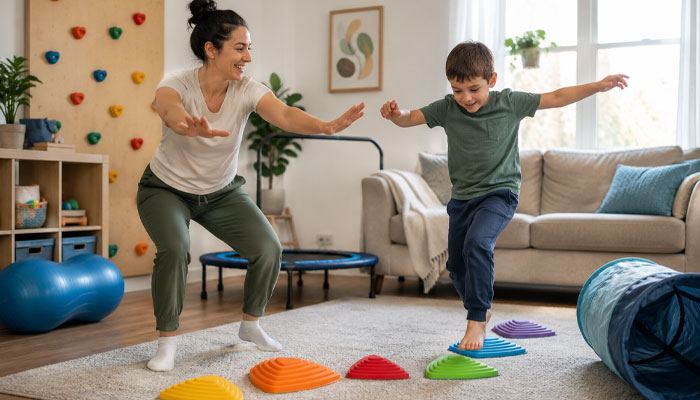
Children learn best when their bodies and brains are actively engaged. Sitting for long periods, completing schoolwork, using screens, or focusing on structured activities can sometimes leave children feeling restless, tired, distracted, or overwhelmed. In-home movement activities and brain breaks are simple ways to help children reset their energy, improve attention, and build important developmental skills. Occupational therapists often recommend purposeful movement because it supports sensory processing, coordination, balance, body awareness, motor planning, and emotional regulation.
The good news is that parents do not need expensive equipment or a large play area to introduce movement into the daily routine. Many occupational therapy-inspired activities can be completed using pillows, chairs, tape, balls, cups, household containers, and other items already available at home.
Why Are Movement Activities Important for Child Development?
Movement is an essential part of healthy childhood development. Activities such as jumping, crawling, balancing, pushing, pulling, reaching, and climbing help children understand how their bodies move through space. These experiences strengthen the muscles needed for everyday tasks while supporting the sensory systems that influence attention, posture, coordination, and confidence.
Regular movement can also prepare children for activities that require concentration. A short physical activity before homework, reading, handwriting, or online learning may help some children feel more organized and ready to participate. Movement should not be viewed only as exercise; it can also be an important learning tool.
What Is a Brain Break?
A brain break is a short pause from a seated, academic, or highly focused activity. Instead of simply stopping the task, children are encouraged to complete a quick movement, breathing, stretching, or sensory activity. Brain breaks may last anywhere from two to ten minutes depending on the child's age, needs, and daily schedule.
Occupational therapists may use brain breaks to help children change their level of alertness. An energetic child may benefit from slower, controlled movement, while a child who appears tired may respond well to jumping, dancing, or active movement. The goal is to help the child return to the next activity feeling more comfortable and ready to engage.
1. Create a Simple Indoor Obstacle Course
An obstacle course is one of the easiest ways to combine several developmental skills into one activity. Arrange cushions, chairs, soft toys, tape lines, or boxes to create a safe path around the room. Ask your child to crawl under a chair, step over a pillow, walk along a taped line, jump to a target, and finish by throwing a soft ball into a basket.
Obstacle courses encourage gross motor coordination, balance, motor planning, sequencing, and body awareness. Parents can change the course regularly to keep the activity interesting and appropriately challenging.
2. Animal Walk Brain Breaks
Animal walks provide whole-body movement without requiring special equipment. Encourage your child to move across the room like a bear, crab, frog, duck, or kangaroo. Bear walks involve moving on the hands and feet, while crab walks require the child to support the body using the hands and feet while facing upward.
These activities can strengthen the shoulders, arms, core, and legs. They may also provide proprioceptive input, which comes from muscles and joints and helps children develop better awareness of their bodies.
3. Pillow Jumping and Safe Landing
Place a few firm cushions or pillows on the floor and create a safe jumping pathway. Children can jump from one target to another while pretending they are crossing a river, exploring space, or avoiding imaginary obstacles. Encourage controlled jumping with both feet and safe, balanced landings.
This playful activity can support balance, bilateral coordination, lower-body strength, and spatial awareness. Always ensure the surrounding area is free from hard furniture, sharp corners, or slippery surfaces.
4. Cross-Body Movement Activities
Crossing the midline means moving one side of the body across the imaginary center line of the body. This ability is important for many everyday tasks, including dressing, writing, reading, playing sports, and using both sides of the body together.
Try activities such as touching the right hand to the left knee, reaching across the body to pick up toys, marching while touching opposite knees, or moving objects from one side of the room to the other using alternating hands. Turn the activity into a song or rhythm game to make it more engaging.
5. Wall Pushes for a Quick Sensory Break
Wall pushes are simple and can be completed almost anywhere. Ask your child to stand facing a wall, place both palms flat against it, and gently push as if trying to move the wall. Hold the push for several seconds, relax, and repeat.
This activity provides muscle and joint input and may be useful before seated work or during transitions. Children should always complete the movement comfortably without pain or excessive force.
6. Balloon Keep-Up Game
Blow up a balloon and challenge your child to keep it from touching the floor. The child can tap it using alternating hands, elbows, knees, or feet. You can also introduce simple instructions such as, "Use your left hand," "Touch it with your right elbow," or "Clap before hitting the balloon."
Balloon games can encourage visual tracking, hand-eye coordination, balance, reaction time, bilateral coordination, and attention. Because balloons move slowly, they can be easier for younger children to follow than faster-moving balls.
7. Tape-Line Balance Challenge
Place painter's tape on the floor in a straight, curved, or zigzag pattern. Ask your child to walk along the line without stepping outside it. Make the game more challenging by encouraging heel-to-toe walking, walking backward, carrying a lightweight object, or pausing on one foot at certain points.
Balance activities help develop postural control, coordination, concentration, and confidence with movement.
8. Dance and Freeze
Play your child's favorite music and encourage free movement. Pause the music unexpectedly and ask everyone to freeze like a statue. Restart the music and repeat several times.
Dance-and-freeze games combine physical activity with listening, impulse control, motor planning, and body awareness. Parents can add instructions such as dancing slowly, moving like a robot, jumping, marching, or moving only the upper body.
9. Household Heavy-Work Activities
Children can participate in age-appropriate household activities that naturally involve pushing, pulling, lifting, or carrying. Examples include carrying laundry, pushing a lightweight basket, helping arrange cushions, wiping a table, watering plants with a small container, or moving toys into storage boxes.
These activities encourage independence while providing meaningful movement. Tasks should always match the child's age and physical abilities, with adult supervision when necessary.
10. Stretching and Breathing Breaks
Not every brain break needs to be energetic. Some children benefit from calm movement after exciting play or before bedtime. Encourage simple stretches such as reaching toward the ceiling, touching the toes, stretching the arms sideways, or slowly rolling the shoulders.
Combine stretching with slow breathing. Ask the child to breathe in through the nose and gently breathe out through the mouth. Calm breathing can help children slow down and become more aware of their bodies and emotions.
How Often Should Children Take Brain Breaks?
There is no single schedule that works for every child. Younger children may need movement opportunities more frequently than older children. Parents can watch for signs such as fidgeting, leaving the chair repeatedly, losing concentration, becoming frustrated, or appearing physically tired.
A short movement break before these behaviors increase may make transitions easier. Brain breaks can be included between homework tasks, after screen time, before reading, during study sessions, or whenever a child appears to need a physical reset.
Keep Movement Fun, Safe, and Child-Centered
Children are more likely to participate when movement feels like play rather than another task they must complete. Allow your child to choose favorite activities, use imaginative themes, play music, create small challenges, or participate together as a family.
Every child develops differently, so movement activities should be adapted to individual abilities. Stop any activity that causes pain, dizziness, fear, or unusual discomfort. Children with developmental, sensory, neurological, orthopedic, or medical concerns may benefit from individualized recommendations from a qualified occupational therapist or healthcare professional.
Supporting Development Through Everyday Movement
In-home movement activities and brain breaks can turn ordinary moments into valuable developmental opportunities. Jumping, crawling, balancing, dancing, stretching, carrying objects, and completing cross-body movements can support coordination, strength, sensory awareness, attention, and confidence.
Parents do not need to create a complicated therapy program at home. A few minutes of purposeful movement throughout the day can encourage active participation and make learning routines more enjoyable. When activities are playful, safe, consistent, and matched to the child's developmental needs, movement becomes a natural part of growing, learning, exploring, and building lifelong skills.
Articles
- Auditory Processing Delays when Primitive Reflexes are Retained
- Aren’t Retained Primitive Reflexes Just Autistic Disorders?
- Retained Primitive Reflexes Creating Self-Esteem Issues and Self-Doubt in Kids
- Stop Using White Noise to put Babies and Toddlers to Sleep? What the Research Says
- Attention Activities Building Foundational Elements for Attention and Focus and ADHD
- 10 Brain Boosting Activities to Awaken the Brain for Learning Readiness
- In-Home Circle Time Schedule with Purposeful Movement for Therapists, Parents and Teachers
- Home-Based Circle Time Movement and Brain Break Resources for Parents and Therapists
- In-Home Movement Activities and Brain Breaks from the Best Occupational Therapists
- Gross motor skills tied to child’s brain development
- Wrapped Legs Around Chair? A Sign of Weak Core Muscle that Causes Reading and Writing Delays
- CUP STACKING: Studies Show Cup Stacking Improves Reading Test Scores and Cross-Patterning
- Jumping Toys for better Vestibular Input
- Why handwriting fails without proper Core Strength and Hand Strength
- 7 Essential Motor Skills needed for a Child to Reach Academic Success
- Are delayed milestones and weak motor skills causing gaps in my child’s learning
- The 4 Foundational Cornerstones needed to develop a Child’s Learning Readiness
- anchor-sight-word-retention-with-simple-movement-exercises
- Brain-Building Animal Movement Activities Target Learning Skills
- 7 Strategies to Accomplish Positive Compliance with Retained Primitive Reflex Integration
- Child with Zinc Deficiency may show signs of Learning Challenges
- Hands-Grasping Reflex Delays Handwriting and Speech Development if Retained
- Deep Breathing Activities to Calm Sensory Meltdowns and Ground Emotions
- 3 Retained Primitive Reflexes Responsible for Poor Balance
- toe walking
- Anxious Behavior
- Retained Primitive Reflexes that Cause Sensory Sensitivities
- Retained Primitive Reflexes Causing Picky Eating, Sugar Cravings and Compulsive Eating
- Tactile Defensiveness
- 10 Fun Activities to Boost Your Child's Speech Development
- Exploring Learning through Play: Educational Activities for Kids
- Why Crossing the Midline Activities Helped this Childrens Listen to his Teacher
- Music Therapy: Study Says Music Key for Non-Verbal Children and Children with Speech and Language Delays
- Tactile Toys for Sensory Defensiveness and Tactile Stimulation
Have any Query or Need any information about our services
